Astudity Insights · No. 04 · Business Education
Running the Numbers
Business fundamentals for Nigerian founders and SME owners
The financial statements, cash habits, compliance duties and funding choices that separate businesses that last from businesses that merely survive.
Nigeria is a nation of enterprise. The most recent national survey of micro, small and medium enterprises, by the National Bureau of Statistics and SMEDAN, counted 39.65 million MSMEs, contributing 46.31% of GDP and 6.21% of exports. Yet many good businesses stall, not because the product is weak but because the owner cannot see the numbers clearly, runs out of cash while still “profitable”, or is not ready when an investor or lender asks hard questions.
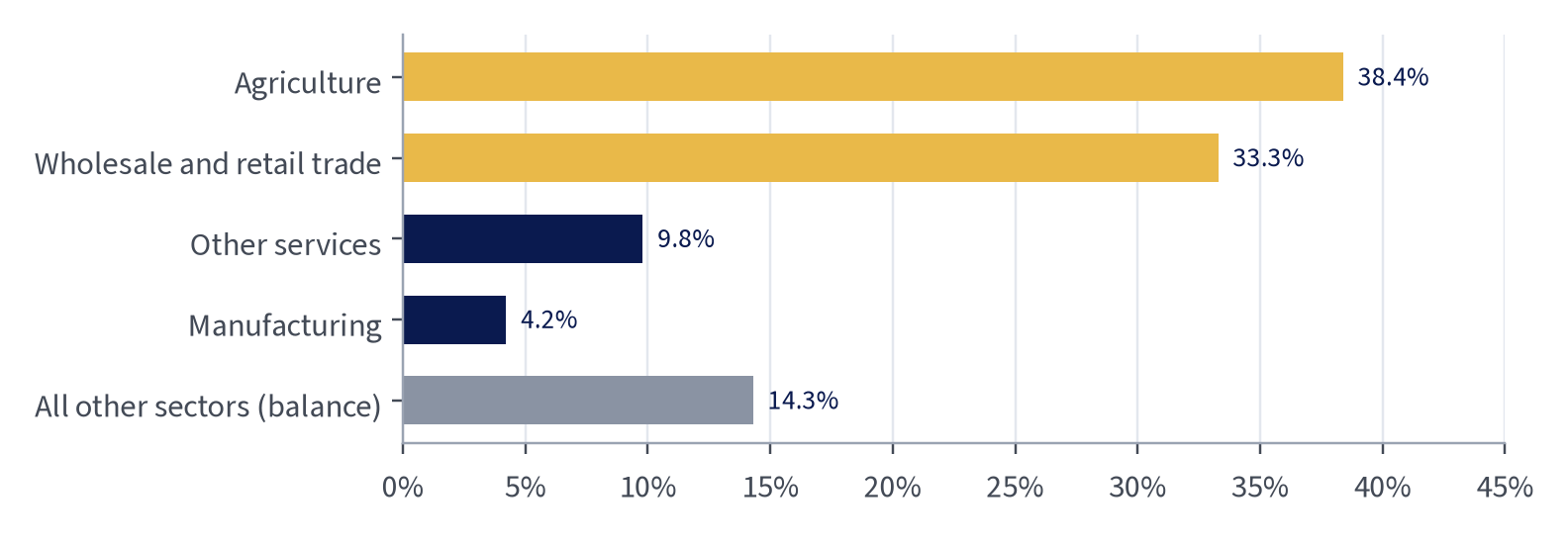
Most of those firms are in agriculture and trade, and almost all are micro businesses: the survey counted about 39.0 million micro enterprises against roughly 617,000 small and 53,000 medium ones.
Where Nigeria's small businesses operate
Share of MSMEs by sector, NBS/SMEDAN MSME Survey 2021 (per cent)
This guide covers the fundamentals every owner should master: the three financial statements, cash flow, pricing, compliance, funding and governance.
The operating environment, as at November 2026
- Monetary Policy Rate: 23%, the anchor for borrowing costs
- Headline inflation: 14.06% (October 2026)
- Naira (NFEM close): ₦1,394/$ on 20 November 2026
- Small companies: 0% company income tax if turnover is ₦100 million or less and fixed assets ₦250 million or less (professional services excluded)
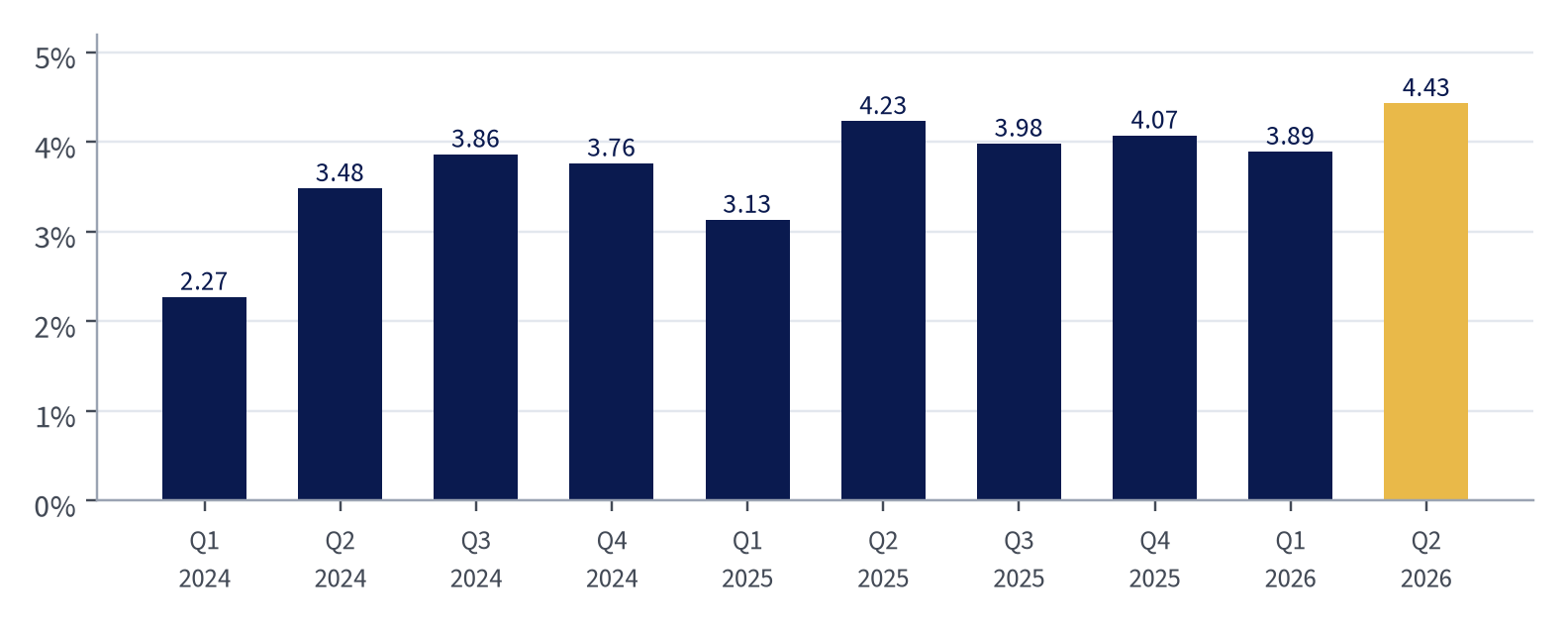
- Real GDP growth: 4.43% in Q2 2026
The wider economy has kept growing, if modestly, since the national accounts were rebased to 2019 prices.
Nigeria's real GDP growth by quarter
Year-on-year, constant 2019 prices (rebased series), Q1 2024 to Q2 2026
1. Three statements every owner must read
The income statement (profit and loss) shows sales, the costs of making those sales, overheads and the profit left over for a period. It answers: are we making money?
The balance sheet shows what the business owns (assets), what it owes (liabilities) and what belongs to the owners (equity) on a given date. It answers: how strong are we?
The cash flow statement shows the cash that actually came in and went out, from operations, investment and financing. It answers: can we pay our bills?
The three are linked. Profit flows into equity on the balance sheet. Cash on the balance sheet is the closing figure in the cash flow statement. If you can read all three together, you can understand any business, including your own.
2. Profit is an opinion; cash is a fact
A business can report a profit and still run out of money. The usual cause is working capital: cash tied up in stock and in customers who have not yet paid.
Worked example: profitable but broke
A distributor buys goods for ₦8 million, paying the supplier immediately, and sells them for ₦10 million on 60-day credit to a large customer. On paper it has made a gross profit of ₦2 million. In the bank, it is ₦8 million down for two months, while salaries, rent and diesel still have to be paid.
If the customer pays late, the business must borrow, perhaps at a rate well above the 23% MPR, or stop buying stock. Several large credit sales at once can sink a profitable firm.
What helps: negotiate supplier credit, ask for part-payment upfront, invoice promptly, chase receivables weekly, and forecast cash thirteen weeks ahead. (Illustrative figures.)
Three numbers to track every month:
- Debtor days: how long customers take to pay you.
- Stock days: how long goods sit before they are sold.
- Creditor days: how long you take to pay suppliers.
Shortening the first two and sensibly lengthening the third frees cash without borrowing a kobo.
3. Pricing when costs keep moving
With inflation at 14.06% and imported inputs priced off an exchange rate that moved from ₦1,360/$ to ₦1,394/$ in a single week in November 2026, a price list set once a year is a risk. Good pricing discipline means:
- Know your full unit cost, including transport, power, packaging, wastage and a fair share of overheads.
- Separate naira and dollar costs so you can see how much of your cost base moves with the exchange rate.
- Review prices on a schedule (monthly or quarterly) rather than in a panic.
- Protect your gross margin, the percentage left after direct costs. Volume does not rescue a negative margin; it multiplies the loss.
- Explain changes to customers early and honestly. Trust is part of your price.
4. Separate the owner from the business
Mixing personal and business money is the most common bookkeeping failure in small firms. It makes profit impossible to measure, tax harder to calculate and the business unattractive to any lender or investor. Open a business account, pay yourself a regular salary or a recorded drawing, and keep receipts for every expense. Simple accounting software or even a well-kept spreadsheet is enough to start.
5. Compliance: the duties that protect your business
Company registration and annual returns. A company registered with the Corporate Affairs Commission (CAC) under the Companies and Allied Matters Act 2020 must file annual returns. A qualifying small company may be exempt from having its accounts audited, but it must still file its return; late filing attracts penalties, and the company and its officers may be liable.
Tax. The Nigeria Tax Act 2025 sets a 0% company income tax rate for small companies, defined as those with annual gross turnover of ₦100 million or less and fixed assets of ₦250 million or less; professional-service businesses are excluded from that definition. A 0% rate does not mean no paperwork: register for tax, keep records and file returns as required.
Pensions for staff. Employers covered by the Pension Reform Act 2014 must contribute at least 10% of each employee’s monthly emoluments and remit the employee’s 8%.
Sector licences. Food, drugs, finance, telecoms, oil and gas, and trading by weights and measures all carry their own regulators and rules. Find out which apply before you trade, not after a notice arrives.
6. Choosing how to fund growth
| Source | Best for | What it costs you |
|---|---|---|
| Your own savings and retained profit | Early stages, proving the model | Slower growth; your own risk |
| Customers (deposits, prepayments) | Order-driven businesses | Delivery pressure |
| Supplier credit | Stock-heavy businesses | Relationship and reliability |
| Bank and DFI loans | Businesses with steady cash flow and assets | Interest and collateral |
| Grants and competitions | Specific sectors and founders | Time, reporting, conditions |
| Angel investors and venture capital | Fast-growing, scalable firms | A share of ownership and control |
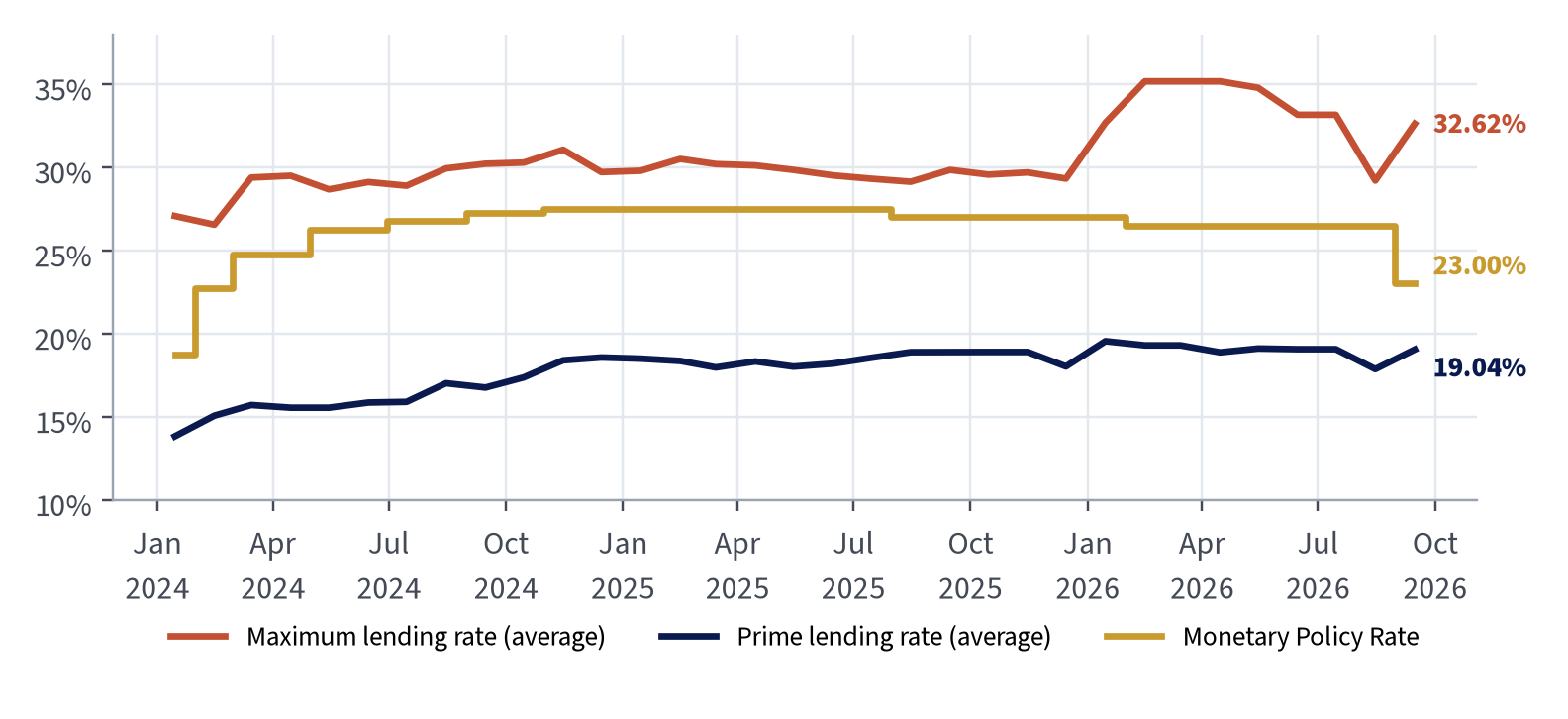
Debt is cheaper when cash flow is steady; equity suits businesses that must invest heavily before they earn. Borrowing costs in Nigeria remain high. The CBN’s own survey of bank rates put the average prime lending rate at 19.04% and the average maximum lending rate at 32.62% in September 2026, so plan repayments against realistic cash forecasts, not hopes.
The price of credit for businesses
Average prime and maximum lending rates, and the MPR, January 2024 to September 2026
Be wary of anyone who asks for a “processing fee” before releasing a grant or loan: genuine programmes publish their terms and do not ask applicants to pay to be considered.
7. Becoming investable
Whether you approach a bank, a development finance institution or an angel investor, they will ask similar questions. Be ready with:
- Accounts for at least the last two to three years, prepared on a recognised basis, ideally reviewed by an accountant.
- Management accounts for the current year, monthly.
- A cash-flow forecast with stated assumptions.
- A clear ownership record (who owns what share) and CAC documents.
- A short investment case: the problem, the market, the business model, what the money will do and how progress will be measured.
- Evidence of compliance: tax, pension, licences.
8. Governance is not only for big companies
Governance is how decisions are made and checked. Even a small firm benefits from a few habits: written roles for founders, a simple monthly management meeting with numbers on the table, an outside adviser or two, and a rule that significant contracts are reviewed before signing. These habits make the business easier to run, easier to finance and easier to sell or pass on.
Key takeaways
- Read the income statement, balance sheet and cash flow statement together.
- Cash, not profit, keeps a business alive; manage working capital every month.
- Price from a full unit cost and review prices on a schedule.
- Separate personal and business money from day one.
- File CAC annual returns and tax returns on time; small companies may pay 0% income tax but must still comply.
- Get investable before you need investors.
Owner’s monthly checklist
- Close the month’s books within ten days.
- Review sales, gross margin and overheads against last month and last year.
- Update a thirteen-week cash forecast.
- Chase every invoice more than 30 days overdue.
- Check stock levels and slow-moving items.
- Confirm tax, pension and statutory payments are up to date.
- Review prices against current input costs and the exchange rate.
- Write a one-page update for co-owners or investors.
Glossary
Gross margin: sales minus direct costs, as a percentage of sales.
Management accounts: internal monthly accounts used to run the business.
Retained profit: profit kept in the business rather than paid out.
Unit cost: the full cost of producing or delivering one unit.
Working capital: stock plus receivables minus payables; the cash tied up in operations.
DFI: development finance institution, a lender with a development mandate.
Where to go next
Astudity Spotlight covers business finance, development lenders, genuine grants and company results for Nigerian and African entrepreneurs. Astudity Limited also helps growing private businesses prepare investor-ready materials and data rooms when they come to raise capital.
This publication is educational and is not personalised financial, tax or legal advice. Rules and rates change; check the current position with the relevant regulator or a qualified adviser.
More from Astudity Insights
No. 01 · Finance
How Money Moves in Nigeria
The Central Bank, the banks and the markets, explained
A plain guide to the institutions that set the price of money in Nigeria, the figures that matter as at November 2026, and how to read them for yourself.
No. 02 · Money
Making Every Naira Count
Personal finance when prices keep rising
How to budget, save, protect and grow household money in Nigeria, with naira examples, today's official rates and the rules that protect you.
No. 03 · Investment
Risk, Return and the Real Rate
An investor's primer for Nigeria
What investing really means, how to compare Treasury bills, bonds, shares and funds on equal terms, and how to protect yourself while you build long-term wealth.

No. 05 · Investor Relations
Earning the Market's Trust
Investor relations for growing companies, from first investor to the Exchange
What investor relations is, how the work changes as a company grows, the Nigerian rules that already apply, and a practical playbook for boards and founders.