Astudity Insights · No. 05 · Investor Relations
Earning the Market's Trust
Investor relations for growing companies, from first investor to the Exchange
What investor relations is, how the work changes as a company grows, the Nigerian rules that already apply, and a practical playbook for boards and founders.
Capital is cautious. It goes where it is well informed and stays where it is treated fairly. Investor relations (IR) is the discipline that makes both possible: telling the truth about a company’s performance and prospects, on time and to everyone at once, and listening carefully to what investors say back.
IR is often mistaken for publicity, or for a task that begins on the day a company lists. In fact the habits of good IR start with the first outside shareholder, and they become legal duties long before most boards expect.
IR essentials for Nigerian companies, as at November 2026
- Apex regulator: the SEC, under the Investments and Securities Act 2025
- Quarterly accounts: due within one month of quarter-end on the SEC filing calendar
- Late filing penalty: not less than ₦1 million, plus ₦25,000 for each day the default continues
- Website publication: periodic returns must be published on the company website when filed, enforced from January 2025
- Governance code: the Nigerian Code of Corporate Governance 2018
- Sustainability reporting: IFRS S1 and S2 for public-interest entities for periods beginning on or after 1 January 2028
1. What investor relations is
The US-based National Investor Relations Institute (NIRI) describes IR as “a strategic management responsibility that integrates finance, communication, marketing and securities law compliance to enable the most effective two-way communication between a company, the financial community, and other constituencies, which ultimately contributes to a company’s securities achieving fair valuation”.
Two phrases in that definition do most of the work. Two-way communication: IR is as much about listening as speaking. Fair valuation: the goal is an honest price, not the highest possible one. A share price pushed above what the business can support will fall back, and the company’s credibility will fall with it.
2. A bigger market, with sharper questions
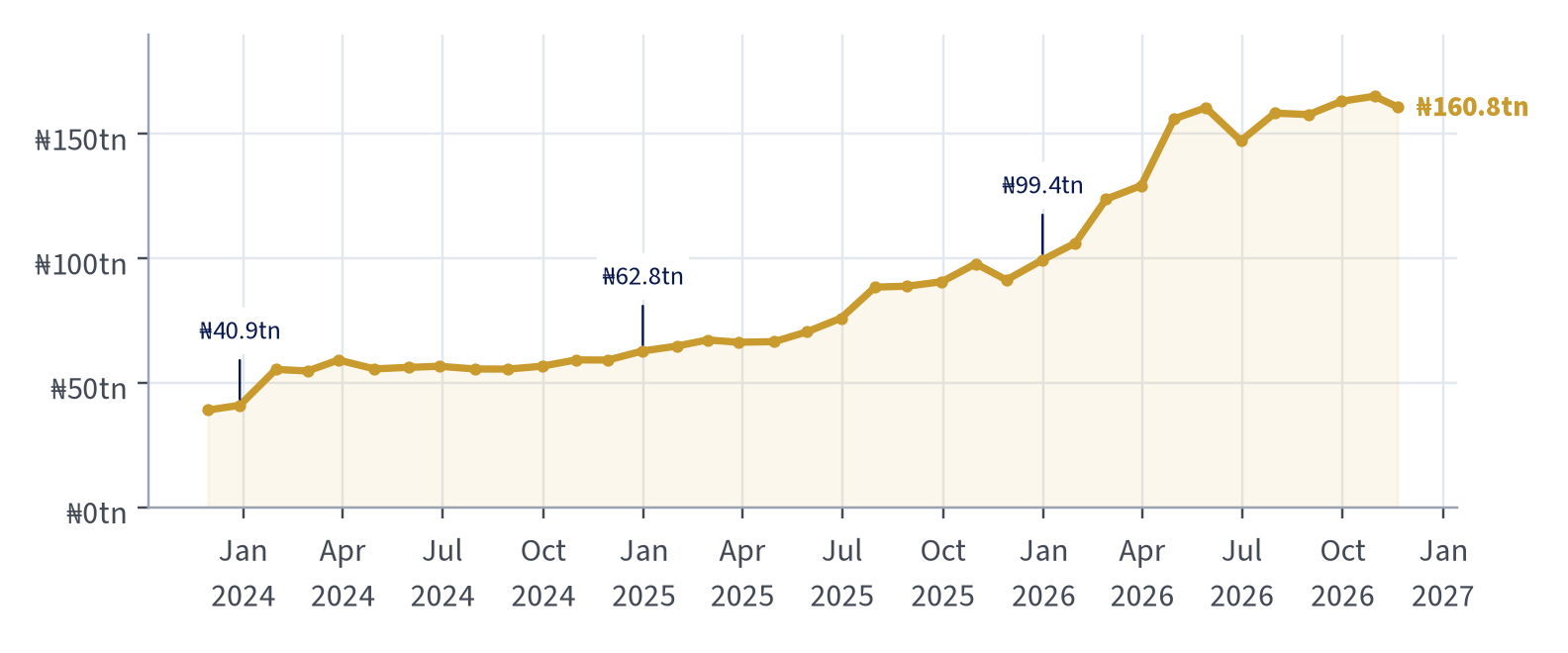
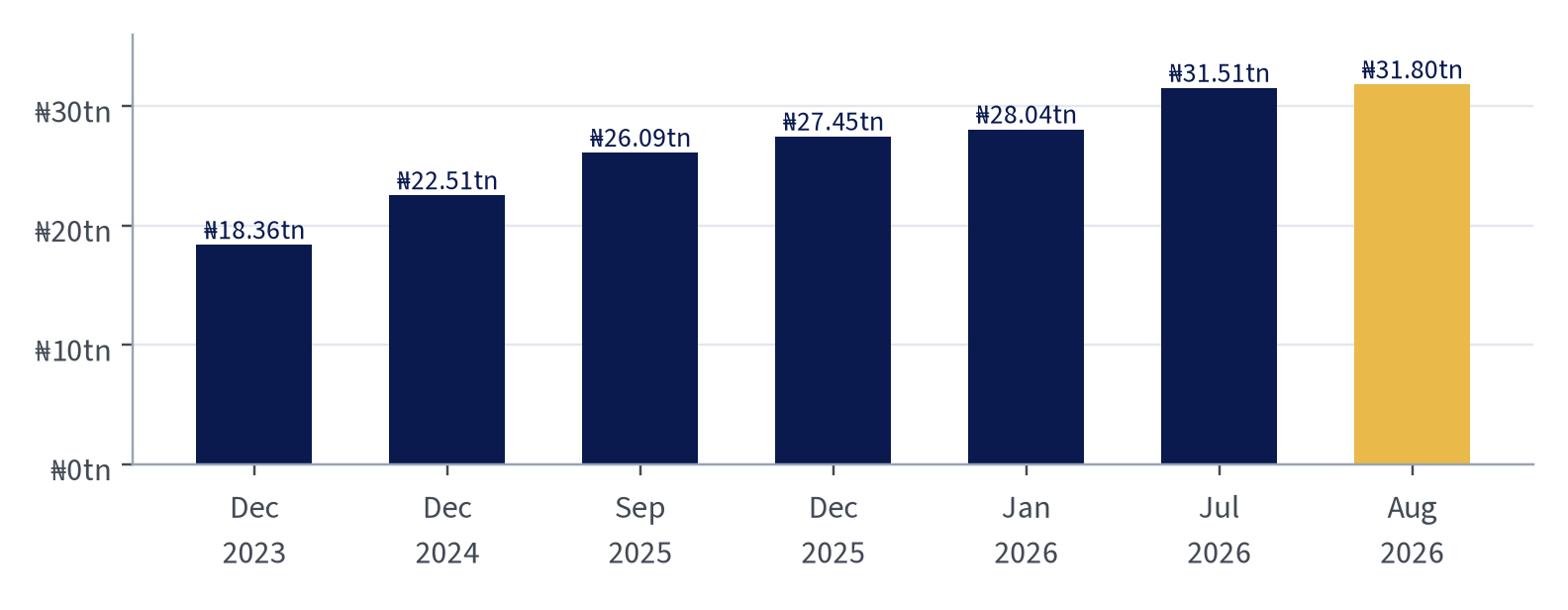
The audience for IR in Nigeria has grown quickly. The value of companies listed on NGX rose from ₦40.9 trillion at the end of 2023 to ₦160.8 trillion on 20 November 2026, partly through price gains and partly through new listings. Over a similar period, pension assets, the country’s largest pool of long-term domestic money, grew from ₦18.36 trillion to ₦31.80 trillion. Bigger, more professional owners ask harder questions, compare companies more closely and reward those that report clearly.
The value of companies listed on NGX
Equity market capitalisation, month-end, November 2023 to 20 November 2026 (₦ trillion)
The growth of Nigeria's pension assets
Total pension fund assets at selected dates (₦ trillion)
3. Who IR serves
- Existing shareholders, large and small, who are entitled to the same material information at the same time.
- Prospective investors, because a company that only talks to its current owners is talking to itself.
- Analysts and fund managers, who interpret the company for the wider market.
- Lenders, bondholders and rating agencies, who read the same accounts.
- Regulators: in Nigeria, the SEC, Nigerian Exchange (NGX) and the Financial Reporting Council of Nigeria (FRC), plus any sector supervisor.
- The board, which needs to hear what the market really thinks.
4. IR grows with the company
The IR ladder
Stage 1: Founders, family and first angels. Keep clean accounts and a current record of who owns what. Send a short, regular update: plan versus actual, cash and runway, problems as well as wins.
Stage 2: Institutional private capital (private equity, DFIs, venture funds). Build a data room before it is requested. Write an investment case that can be repeated without embroidery. Agree reporting rights and stick to them.
Stage 3: Public company, listed or preparing to list. Formal disclosure rules apply: filing deadlines, website publication, insider rules, AGMs, governance reporting. IR becomes a defined function with a calendar, policies and named spokespeople.
Each stage builds on the habits of the last. A company that has sent honest monthly updates to three angels will find the discipline of quarterly reporting far easier.
5. The rules that already apply
The ISA 2025. The Investments and Securities Act 2025 establishes the SEC as the apex regulator of the Nigerian capital market, with objectives that include protecting investors, maintaining fair, efficient and transparent markets and protecting market integrity against market abuse and insider dealing.
Filing deadlines. The SEC’s filing calendar for public companies sets quarterly financial statements as due within one month of each quarter-end and annual reports, for a December year-end, by 31 March. Non-compliance attracts a penalty of not less than ₦1 million and a further ₦25,000 for each day the default continues. For the year-end, the SEC and NGX also allow companies to skip unaudited fourth-quarter results and file audited annual accounts within 60 days instead; a company should choose one route and keep to it.
Publish what you file. In a circular to all public companies, the SEC reminded issuers that periodic returns must be published on their own websites at the same time as they are filed, and that failure would be penalised from January 2025.
Corporate governance. The Nigerian Code of Corporate Governance 2018 expects regular dialogue with shareholders, a shareholder-engagement policy, equal treatment of shareholders, timely and balanced disclosure, an investors’ portal on the company website, and an annual general meeting run as a genuine forum for questions.
Sustainability. Nigeria has adopted the IFRS sustainability disclosure standards. Under the FRC’s amended roadmap, public-interest entities must report under IFRS S1 (general sustainability-related disclosures) and IFRS S2 (climate-related disclosures) for periods beginning on or after 1 January 2028. Preparation, including data systems and board oversight, needs to start well before then.
6. The core toolkit
- A board-approved disclosure policy, naming who may speak for the company and how price-sensitive information is cleared and released.
- A financial calendar, published in advance, with results dates, the AGM and closed periods around results.
- A consistent set of key performance indicators, defined once, reconciled to the IFRS accounts and kept stable from period to period.
- An equity story: a short, honest account of what the company does, where it is going, how it will allocate capital and what the main risks are.
- An investors’ portal: annual reports, results, presentations, governance documents and policies, in downloadable form and kept current.
- Results communication: a clear release, a presentation, and a question-and-answer session open to all, with a transcript or recording.
- Shareholder register analysis: who owns the company, who is buying and selling, and which long-term holders the company is equipped to serve.
- A crisis plan: who convenes, who speaks, how statements are cleared, and how the Exchange and the SEC are notified.
7. The principle of fair disclosure
The CFA Institute and NIRI, in joint best-practice guidelines, set out a simple standard: companies should not give material information to some investors or analysts before others, and should not deny access to analysts in an attempt to influence their research. In the United States this principle is law under Regulation FD. In Nigeria, the 2018 Code says no shareholder, however large, should receive preferential treatment or superior access to information, and insiders must not deal while holding price-sensitive information.
In practice: never give a “quiet word” to a favoured investor; if something material slips out, publish it to everyone promptly.
8. Mistakes that keep repeating
- Treating IR as advertising and chasing the highest price rather than the fairest.
- Changing the definition of key figures when the trend turns down.
- Guidance that is always optimistic and never corrected.
- A website that is out of date, or an investors’ page that is a brochure rather than a library.
- Silence in a crisis, followed by a clarification only after the market has guessed.
- Sustainability pages that do not match the accounts.
- One-way communication in which the board never hears what investors think.
9. How to tell whether IR is working
Do not judge IR by the share price on a single afternoon. Better tests are: filings made on time and published on the website; the same performance measures used period after period; analysts able to rebuild a reasonable model from public information; a shareholder register moving towards the long-term holders the company wants; and market expectations within reach of the board’s own view.
Key takeaways
- IR is two-way communication aimed at fair, not maximum, valuation.
- Good IR starts with the first outside investor, not with listing.
- Nigerian public companies face firm filing deadlines, penalties and a duty to publish returns on their websites.
- Disclose material information to everyone at once; never selectively.
- Prepare now for IFRS S1 and S2 reporting from 2028.
- Measure IR by credibility, consistency and the quality of the shareholder base.
Board checklist: is our IR ready?
- We have a board-approved disclosure policy and named spokespeople.
- Our financial calendar and closed periods are published and kept.
- Our filings are on time and posted on our website on the same day.
- Our investors’ portal holds at least five years of annual reports and our governance policies.
- Our KPIs are defined, stable and reconciled to the accounts.
- We review the shareholder register at board level.
- We have a written crisis communication plan.
- We have an IFRS S1/S2 gap assessment and data plan.
- After each results season, investor feedback goes into the board pack.
Glossary
Closed period: the time before results when insiders may not deal and the company avoids investor meetings.
Equity story: the concise case for owning a company’s shares.
Guidance: a company’s public outlook for future performance.
Material information: information likely to affect the price of a security.
Public-interest entity: an entity the FRC defines as having significant public interest, including listed companies.
Selective disclosure: giving material information to some investors before others.
Astudity Limited and investor relations
Astudity Limited is an investor relations and publishing firm based in Abuja. It works with listed companies, companies preparing to list and growing private businesses on results announcements, annual reports and shareholder communications, disclosure calendars aligned with SEC and NGX requirements, investor-ready materials and data rooms, IFRS S1 and S2 readiness and crisis communication. Enquiries: investors@astuditylimited.com.
This publication is educational and is not legal, regulatory or investment advice. Rules change; confirm current requirements with the SEC, NGX, the FRC and your legal advisers.
More from Astudity Insights
No. 01 · Finance
How Money Moves in Nigeria
The Central Bank, the banks and the markets, explained
A plain guide to the institutions that set the price of money in Nigeria, the figures that matter as at November 2026, and how to read them for yourself.
No. 02 · Money
Making Every Naira Count
Personal finance when prices keep rising
How to budget, save, protect and grow household money in Nigeria, with naira examples, today's official rates and the rules that protect you.
No. 03 · Investment
Risk, Return and the Real Rate
An investor's primer for Nigeria
What investing really means, how to compare Treasury bills, bonds, shares and funds on equal terms, and how to protect yourself while you build long-term wealth.
No. 04 · Business Education
Running the Numbers
Business fundamentals for Nigerian founders and SME owners
The financial statements, cash habits, compliance duties and funding choices that separate businesses that last from businesses that merely survive.